ACCESSIBILITY TOOLS

Bringing the voice of your customers into your boardroom and working practices

Bringing the voice of your customers into your boardroom and working practices
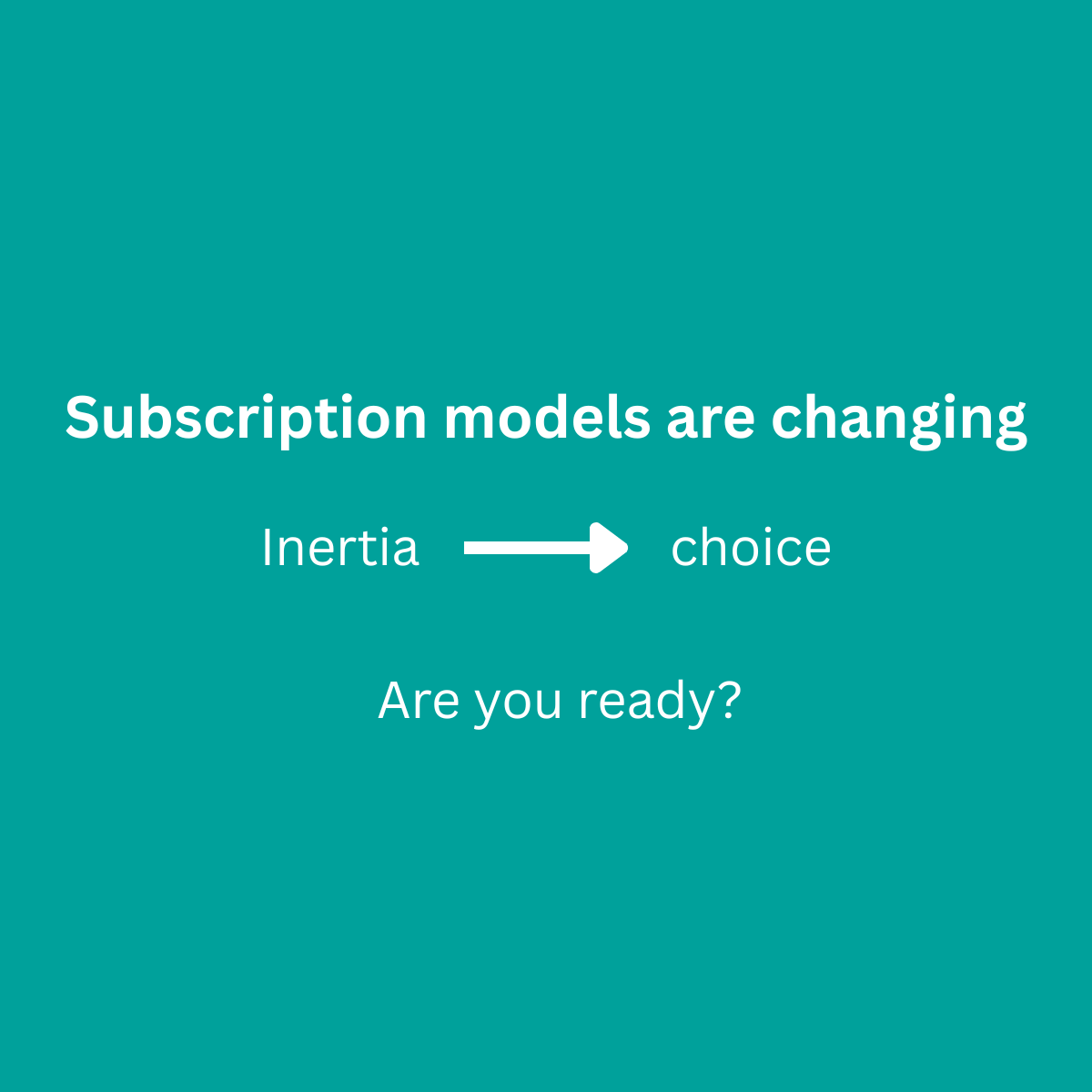
For years, subscription growth has been fuelled by convenience.
But let’s be honest. Some of that growth has also been fuelled by friction.
Hard-to-find cancellation buttons.
Auto-renewals buried in terms and conditions.
Free trials that quietly roll into paid contracts.
The UK is now stepping in to change that.
Under the Digital Markets, Competition and Consumers Act, we’re seeing a reset of how subscription models need to work. And for D2C businesses, this is not a small tweak. It’s a structural shift.
The latest UK Customer Experience Decision-Makers’ Guide from Contact Babel is now out and confirms what most leadership teams already believe.
Customer experience is now the primary way organisations compete.
More than half of businesses say it is their main differentiator.
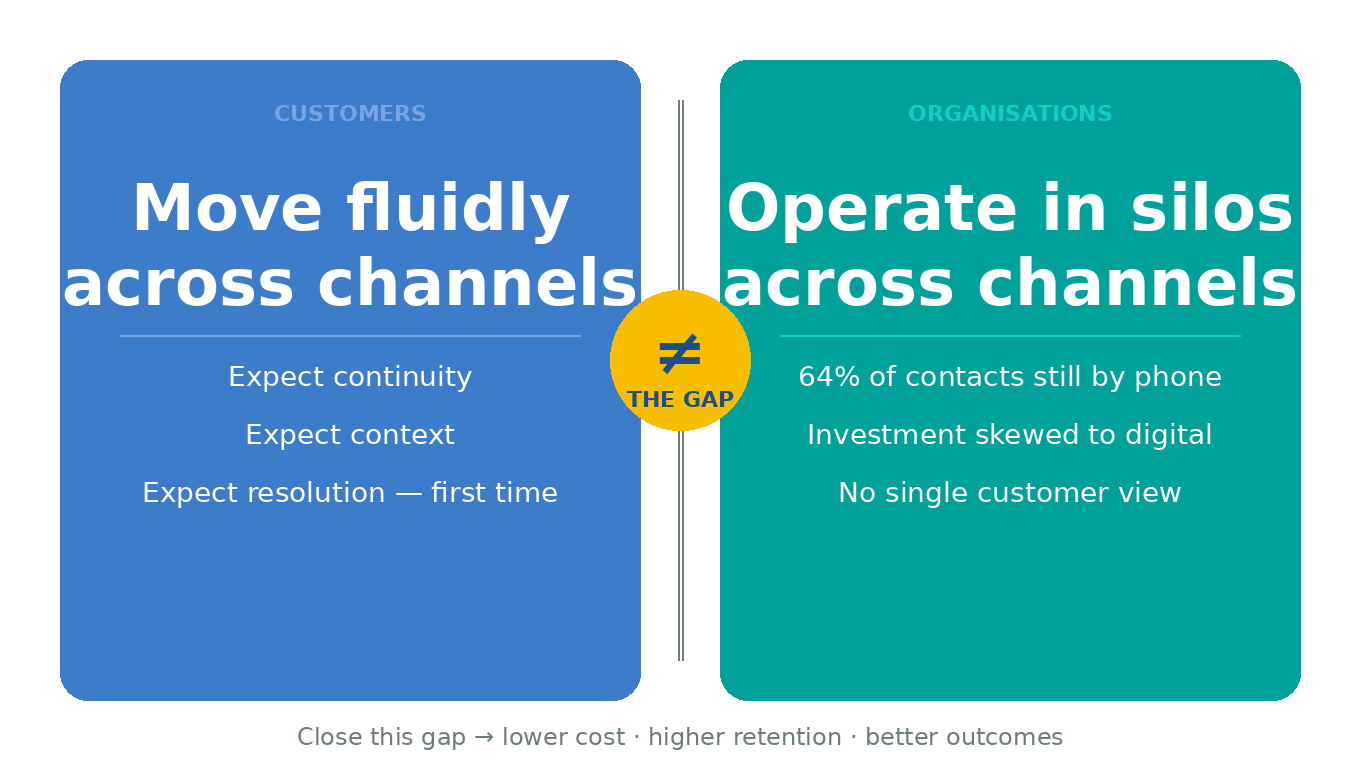
But when you look at how organisations are actually operating, a gap becomes clear.
Customer behaviour has moved on. Most operating models haven’t kept up.
The problem isn’t awareness. It’s alignment.
There is no shortage of CX ambition.
Organisations are investing in digital, exploring AI, talking about personalisation and loyalty. But the same report shows that cost reduction is still the dominant driver behind CX programmes.
That creates a tension that plays out in day-to-day decisions.
Experience is the goal. Efficiency is the pressure.
And customers feel the difference.

Resilience keeps appearing in conversations with contact centre leaders.
It shows up in development plans.
In training requests.
In survey responses about what teams say they need most.
At face value, that might look like a skills issue. A signal that people need more tools to cope, bounce back or manage stress.
But when resilience rises to the top this consistently, it is rarely a simple capability gap.
More often, it is a warning sign.
In last week’s blog, I wrote about the invisible workload we keep adding to contact centre roles.
The extra judgement. The emotional labour. The responsibility that sits quietly alongside scripts, systems and KPIs, but is rarely acknowledged.
Vulnerability is one of the clearest examples of this problem.
Not because it is new, but because it has become normalised.
And because the way organisations respond to it has quietly shifted responsibility onto individuals, without redesigning the systems that surround them.


© Reynolds Busby Lee | Site Map | Privacy
Site by Prussian Blue
Here we explain what cookies are, how we use them and informs you of your choices.
Cookies are small pieces of text sent by your web browser by a website you visit. A cookie file is stored in your web browser and allows the service or a third-party to recognise you and make your next visit easier and the service more useful to you.
When you use and access our website a number of cookie files are placed in your web browser. We use these cookies to enable website functionality and to gain insights into your preferences to the services we provide such as to store your preferences to enable advertisements delivery including behavioural advertising.
We use a combination of cookies such as session and persistent. We also use essential cookies to authenticate users to prevent fraudulent use of our website.
For the full disclosure of the types of cookies we use please click here
If you would like more information regarding cookies please click here to visit the ICO (Information Commissioner’s Office) website.
